Plants in Valdinarco is a collection of fact sheets designed to explore the history, uses and interesting facts about some of the plants commonly found in Valdinarco.
The plants featured here are described not only from a botanical perspective, but also with the aim of preserving and sharing the traditional uses that bring to life the history and practices of the people who have always lived in this area.
___________________________________________________________________
Intervento finanziato con Programma di Sviluppo Rurale dell’Umbria 20214-2020 – Piano di Azione Locale 2014-2020 “Due Valli Un Territorio”
Misura 19 – Sottomisura 19.2 – Azione 19.2.1.10 – “Realizzazione itinerario turistico e valorizzazione di beni architettonici e storici”
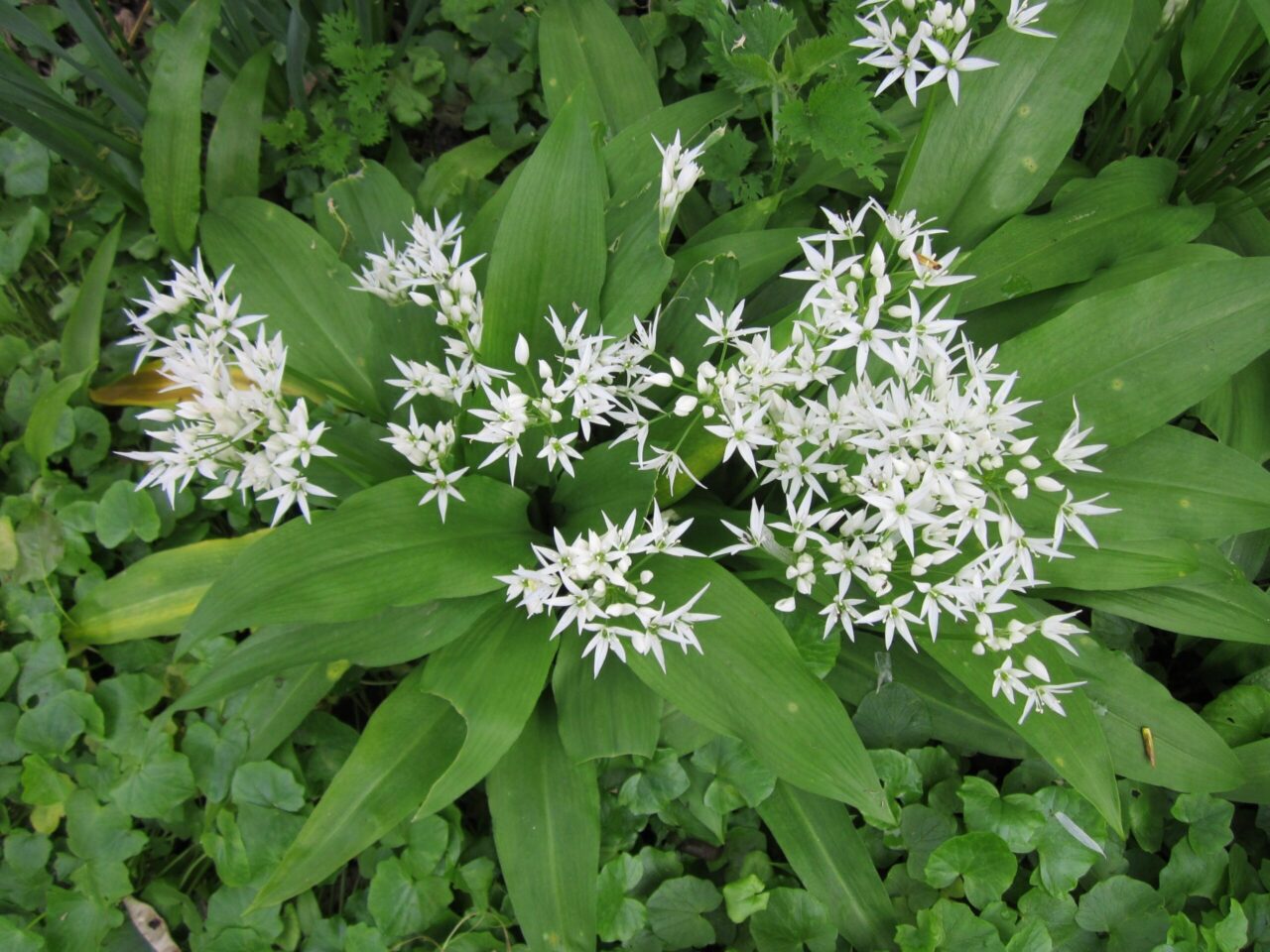
WILD GARLIC
Allium ursinum L.
Wild garlic is also commonly found in the wooded areas of Valdinarco and is easily recognisable by its white flowers and distinctive scent. Do you know why Allium ursinum is also known as “bear’s garlic”? Its leaves are a favourite food of bears when they wake up from hibernation!
A culinary curiosity: its leaves are also used to make a strongly flavoured pesto with, of course, a distinctive hint of garlic!
A wide carpet of wild garlic can be found near the village of Caso, where you can admire its flowering in May. Not far away, local oral tradition also tells of caves that once provided convenient shelters for bears during hibernation.
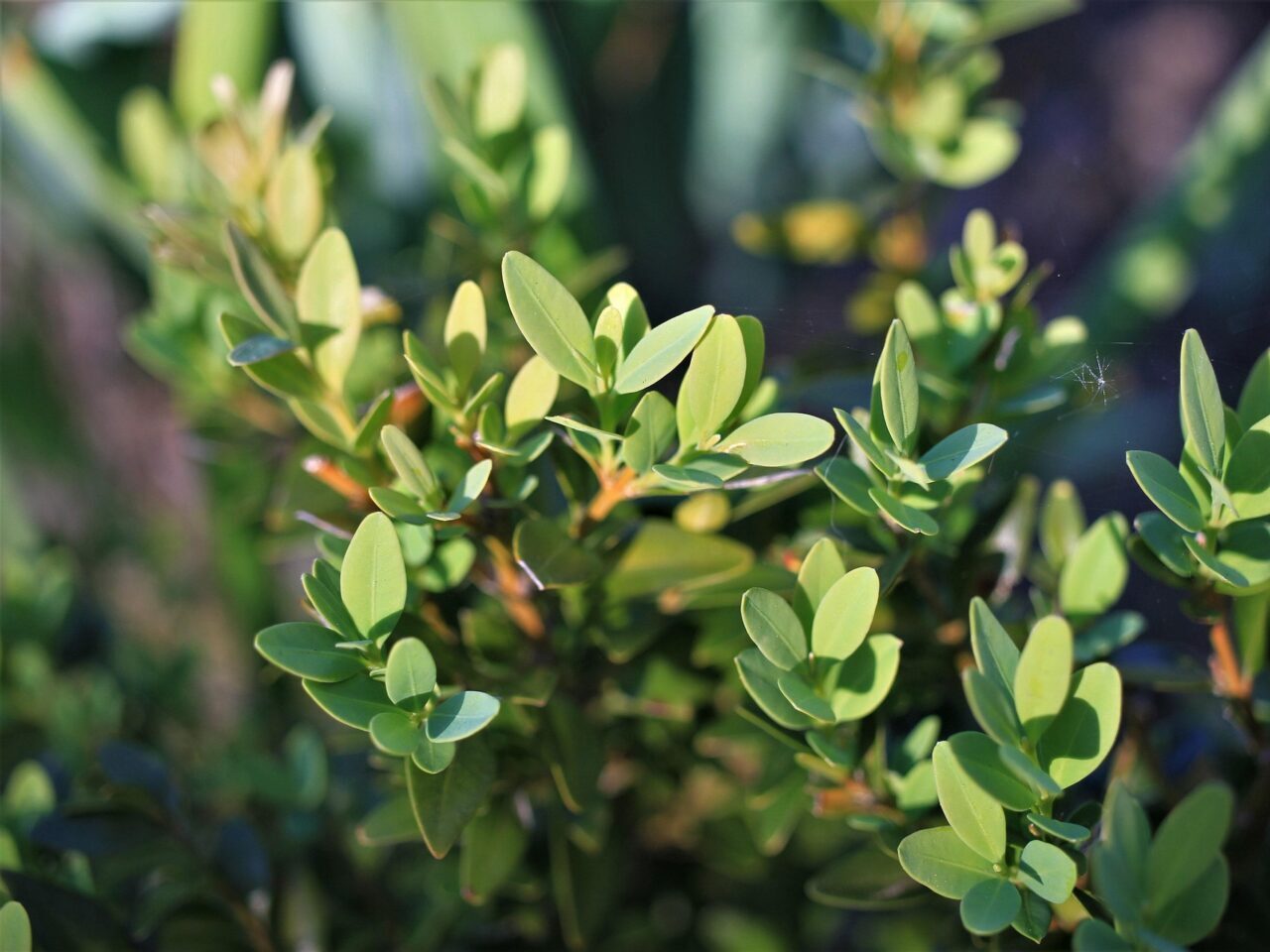
BOXWOOD
Buxus sempervirens L.
Boxwood is an evergreen plant widely found throughout Valdinarco. Its branches provide a very hard and valuable wood, traditionally used by cabinetmakers to make fine objects.
During Lent, sprigs of this plant were also used in a game that was very popular among children until not so long ago, called “Fuori il verde” (“Show the green”).
Whenever two children met, one would say to the other, “fori lo verde” — the “green” being a sprig of boxwood — and whoever was quickest to pull it out first won the challenge. The loser had to pay a small forfeit, usually nothing more than a hard-boiled egg.
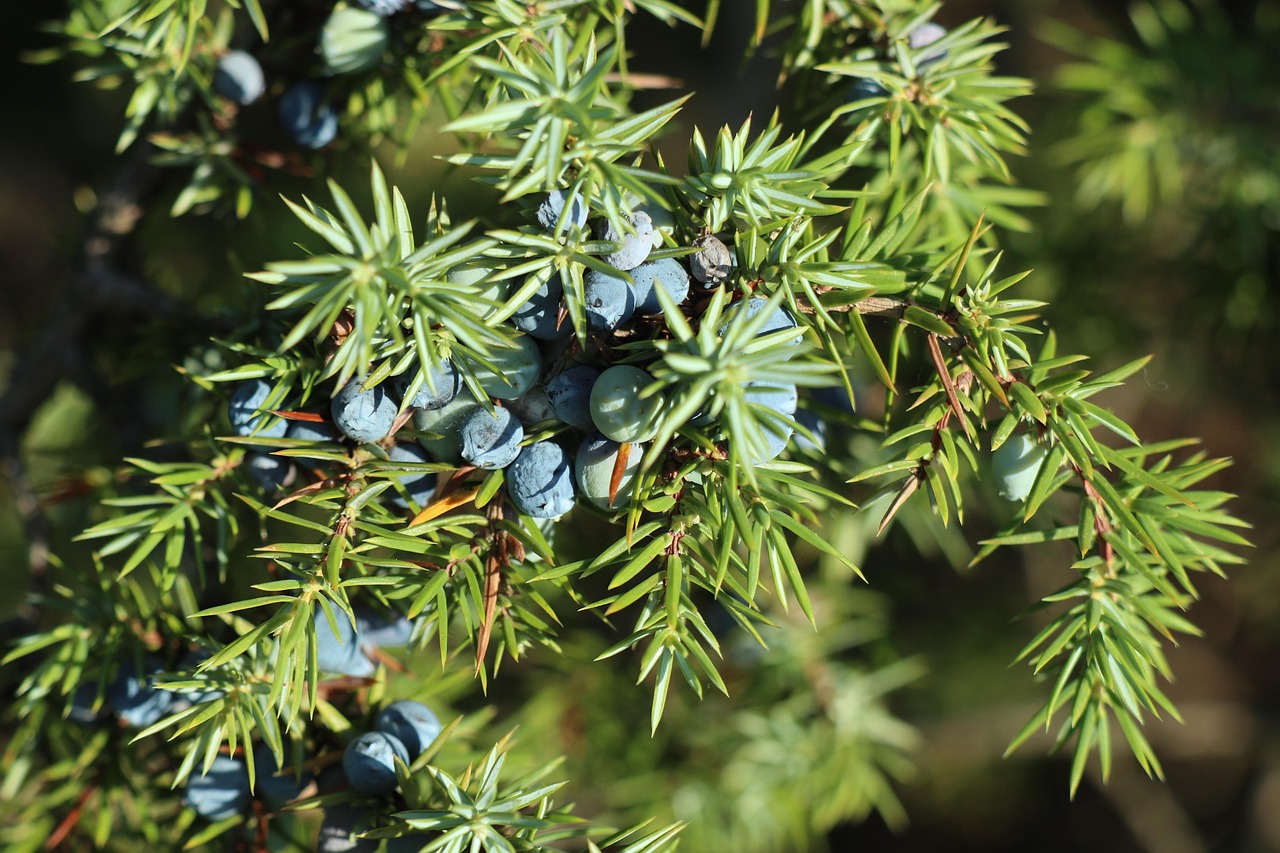
COMMON JUNIPER
Juniperus communis L.
Juniper is a plant that has long been valued for its berries, which range in colour from green to red and, when ripe, to blue.
As well as providing food for birds, juniper berries are used to flavour many traditional dishes and are also an essential ingredient in the production of the famous spirit that takes its name from this plant: gin!
According to local tradition, juniper wood was burned in the fireplace on the night of 31 December. During the darkest days of the year, the fire of New Year’s Eve was fed with a wood believed to have protective powers for the home.
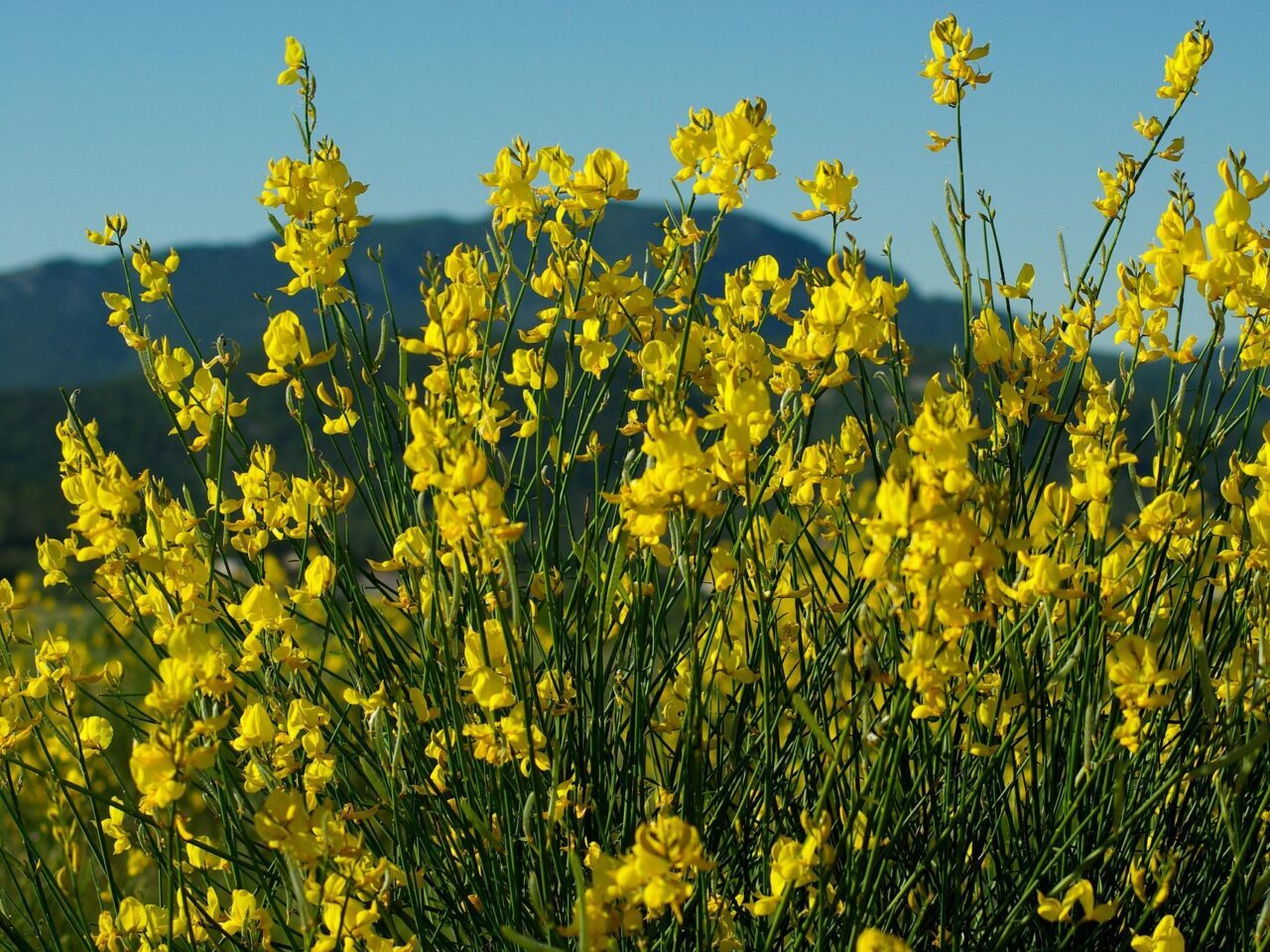
GINESTRA COMUNE
Spartium junceum L.
Broom is a true queen of the mountains: in spring and summer, it brightens the woods with its sunny yellow flowers and enchants everyone with its unmistakable scent.
The broom growing on Monte Coscerno was used on special occasions, for example to create the flower carpets for Corpus Christi. On the afternoon of 23 June, broom flowers were also gathered, together with other wildflowers, to prepare the wonderfully fragrant St John’s water.
But the flowers were not the only useful part of the plant. The twigs were equally important: they provided a very strong fibre used to make fabrics that were extremely stiff and rough. As Mrs Pia still remembers today, even after washing, they remained imperticati (as stiff as a pole)!
GOLDEN CHAIN
Laburnum anagyroides Medik.
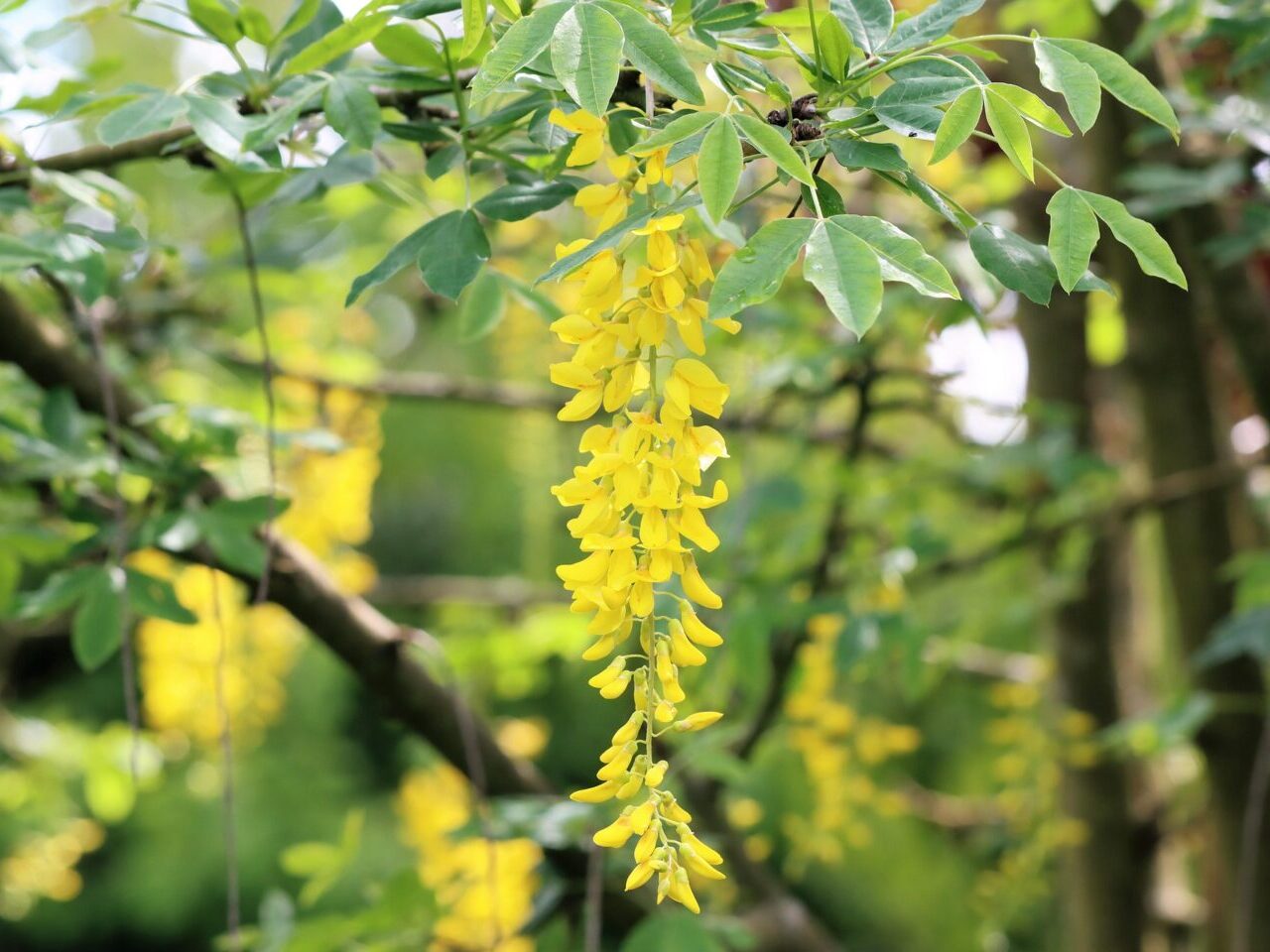
Common laburnum, also known as golden chain, is easily recognised by its flowers, which resemble those of wisteria or acacia but stand out for their different colour: not violet or white, but a vivid yellow!
Its romantic Italian name, maggiociondolo, comes from these flowers: the small golden blossoms form long, fragrant clusters that sway gently in the mild May breeze.
Although this plant belongs to the same family as broad beans, its fruits are highly poisonous and can be fatal. Only some wild animals are able to eat them, and in certain places laburnum has even been regarded as a magical plant.
ALMOND
Prunus dulcis (Mill.) D.A.Webb
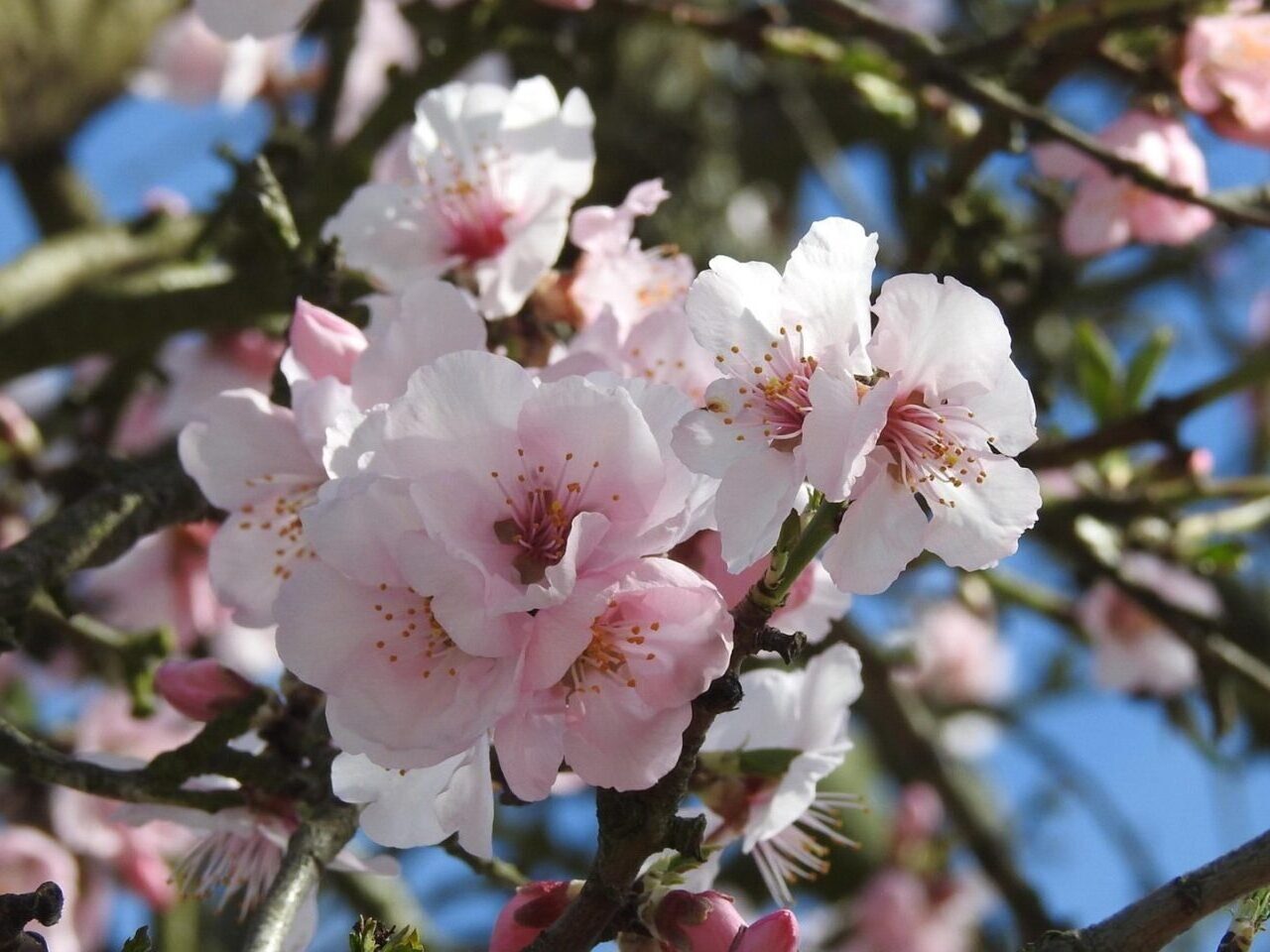
Today, fewer almond trees remain in mountain villages such as Caso, which is a pity because the almond is one of the first trees to blossom in spring.
Although a local proverb says that “the foolish almond blossoms while it snows”, almond trees were traditionally grown in mountain villages because they are highly resistant to cold weather.
Almonds are an energy-rich food that can be stored for a long time. In the past, they were also used to produce valuable almond oil in areas too cold for olive trees.
Together with “roscette” apple, almonds were such an important crop for the inhabitants of Caso that they are even mentioned in popular prayers addressed to Saint Christina, the protector of unmarried women.
APPLE
Malus domestica (Suckow) Borkh.
In the village of Caso, a very distinctive variety of apple tree was once cultivated, producing small but very sweet fruits. These apples provided valuable sustenance for the families living in Caso, which were certainly more numerous than today and depended mainly on sheep farming and agriculture.
The apples could be stored throughout the winter in straw and were such an important resource that they gave their name to the Piano delle Melette, a wide grassy basin that can be admired from the castle of Caso.
The melette (little apple), or mele roscette (small red apple), grown in Caso were also playfully known as mele zitelle (spinster apples) because of their colour. As they ripen, red patches appear on the skin, making these small, round apples resemble the rosy, made-up cheeks of a young unmarried woman hoping to find a future husband.
DOWNY OAK
Quercus pubescens Willd.
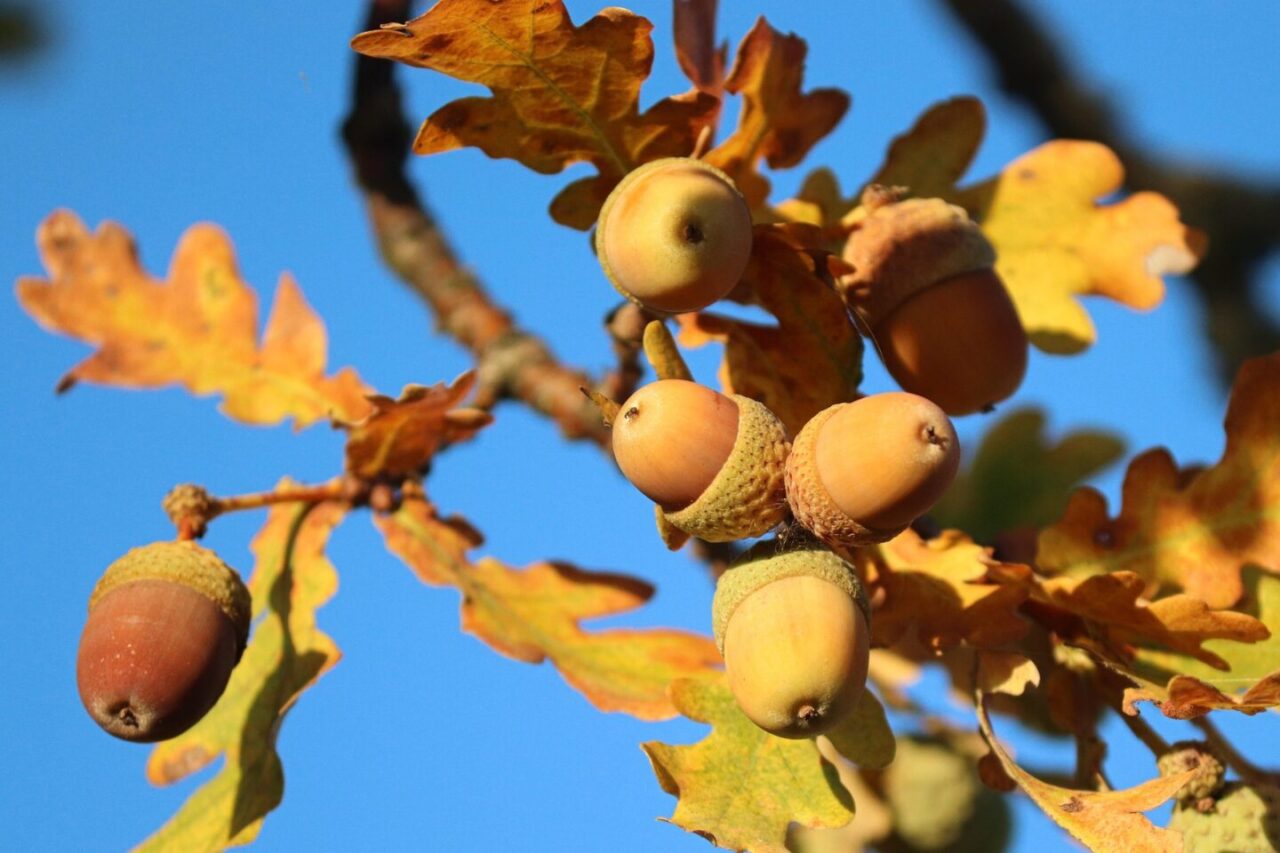
Known in the local dialect as cerqua, the oak is one of the most majestic trees in the woodlands of the Valnerina. In the past, its acorns were an important resource: they were used mainly to feed pigs, but “in wartime” they were also ground into flour or roasted to make a coffee substitute.
When oak branches are attacked by insects, they can develop small woody growths known as galls, locally called cucche or pallecucche.
Thanks to their round shape, the cucche could be turned into perfect little pipes: the gall was opened, carefully hollowed out and then finished with a small hole into which a twig was inserted. Broom twigs were the ones most commonly used for these cucche pipes!
ROSA CANINA
Rosa canina L.
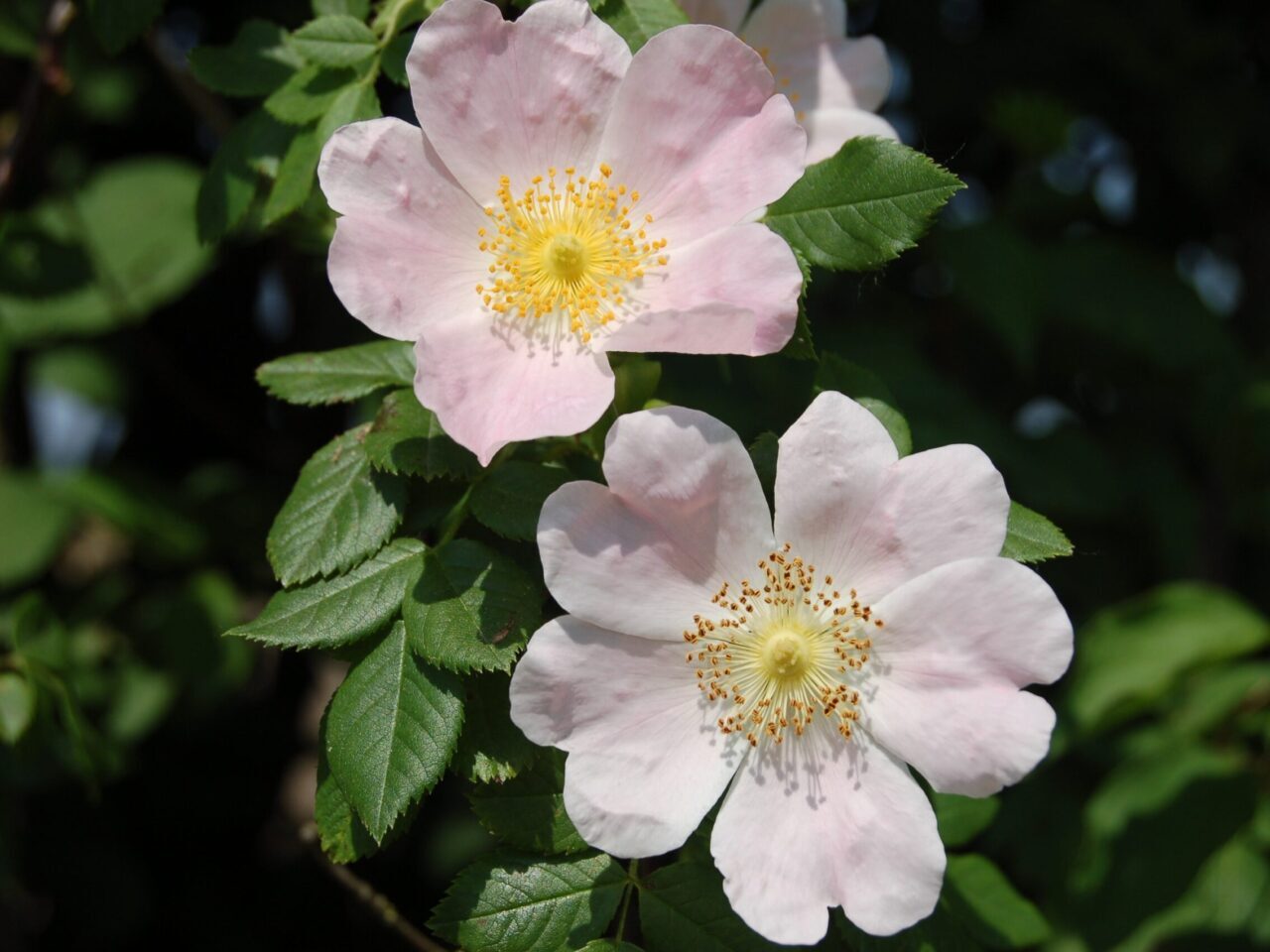
One of the oldest flowers known, so ancient that it also appears in many coats of arms, the five-petalled flower of the dog rose brightens the woodlands throughout Valdinarco.
Its widespread presence may be partly due to a curious prohibition from the past. Unlike the prized juniper wood, burned at the end of the year as a good-luck ritual, dog rose wood was not used because, according to tradition, Christ’s crown of thorns was believed to have been made from its thorny branches.
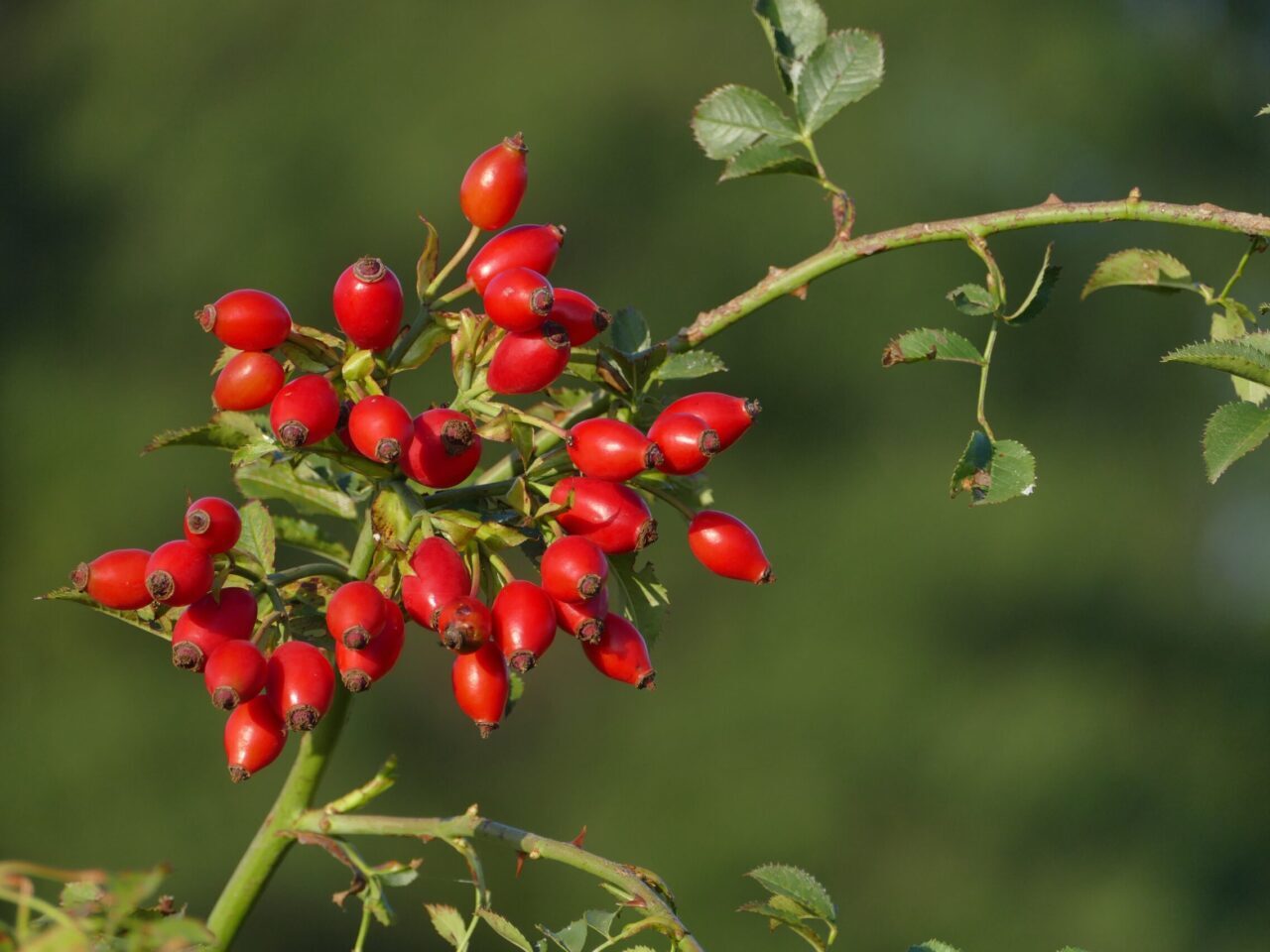
After flowering, dog rose bushes become covered with bright red fruits, known in the Valnerina as caccavelle: a wonderful sight, especially in the heart of winter, when their branches may be covered with a pure white blanket of snow.
The fruits contain more vitamin C than oranges: although they are very difficult to clean, they are gathered and used as a traditional remedy for winter ailments!
SMOKE TREE, DYER’S SOMACH
Cotinus coggygria Scop.
The smoke tree is a shrub found throughout much of the Valnerina and was once one of the plants most widely used for tanning hides. Its cultivation is even mentioned in many municipal statutes and land records from the Valnerina.
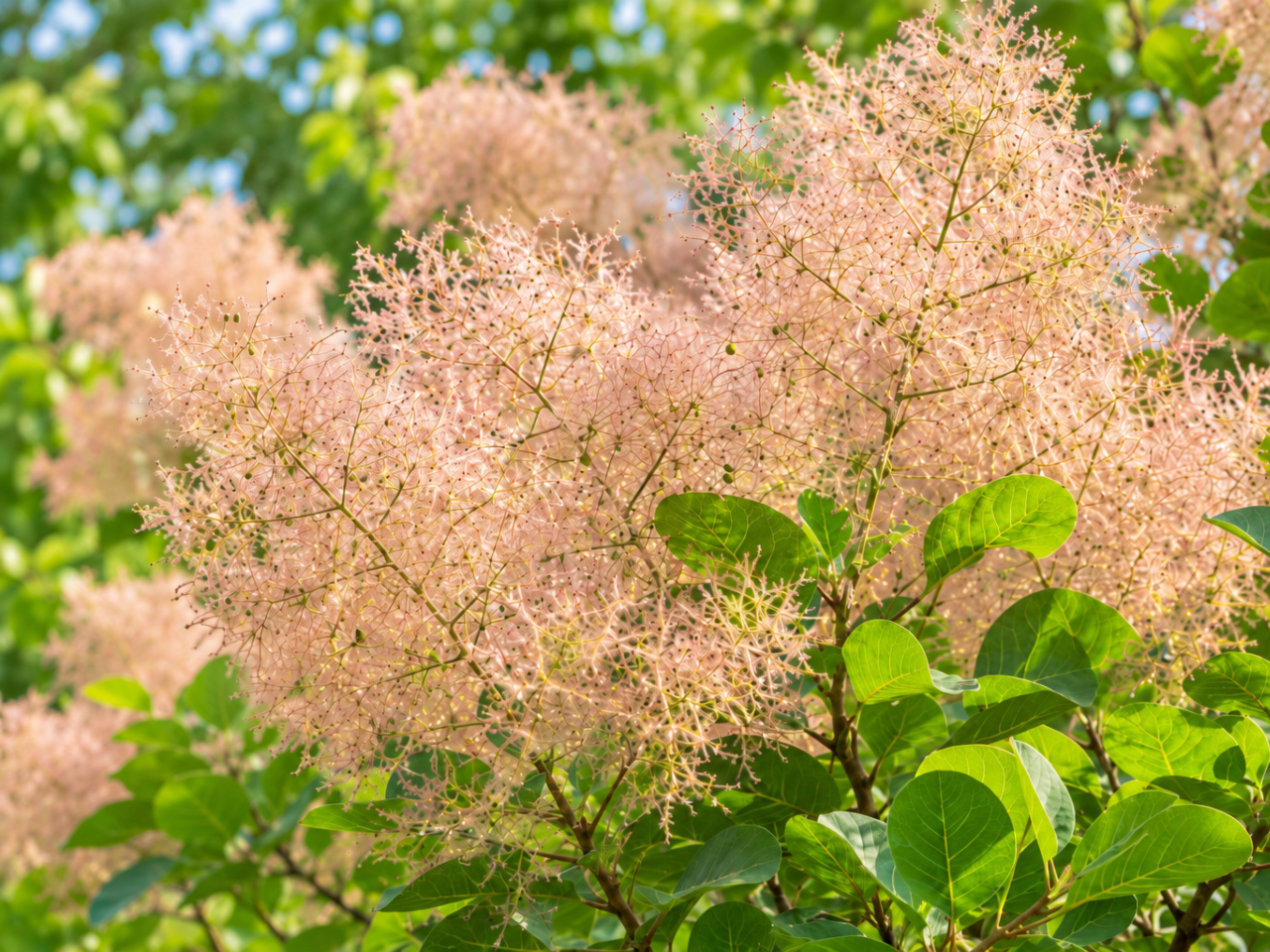
There are two times of year when it is especially easy to recognise. In spring, the smoke tree comes into bloom, producing airy flower clusters that look like little pink clouds, a feature that has earned it the nickname “mist’s tree”. It is equally striking after summer.
Its rounded leaves first turn the colour of golden coins and then brighten the autumn woods, when the shrubs take on a beautiful vivid red.